
Synopsis
Winter driving in Oklahoma leads to a surge in low-speed crashes. Estes Collision in Miami, OK, explains how the right repairs keep your vehicle safe, aligned, and structurally sound after a fender bender. As an experienced auto collision shop, we know that:
- Bumpers and sensors often hide internal damage
- Many low-speed dents qualify for paintless dent repair
- Glass, headlights, and taillights frequently break on icy roads
- Minor impacts can shift frame or alignment points
- OEM-based repairs protect long-term safety and performance
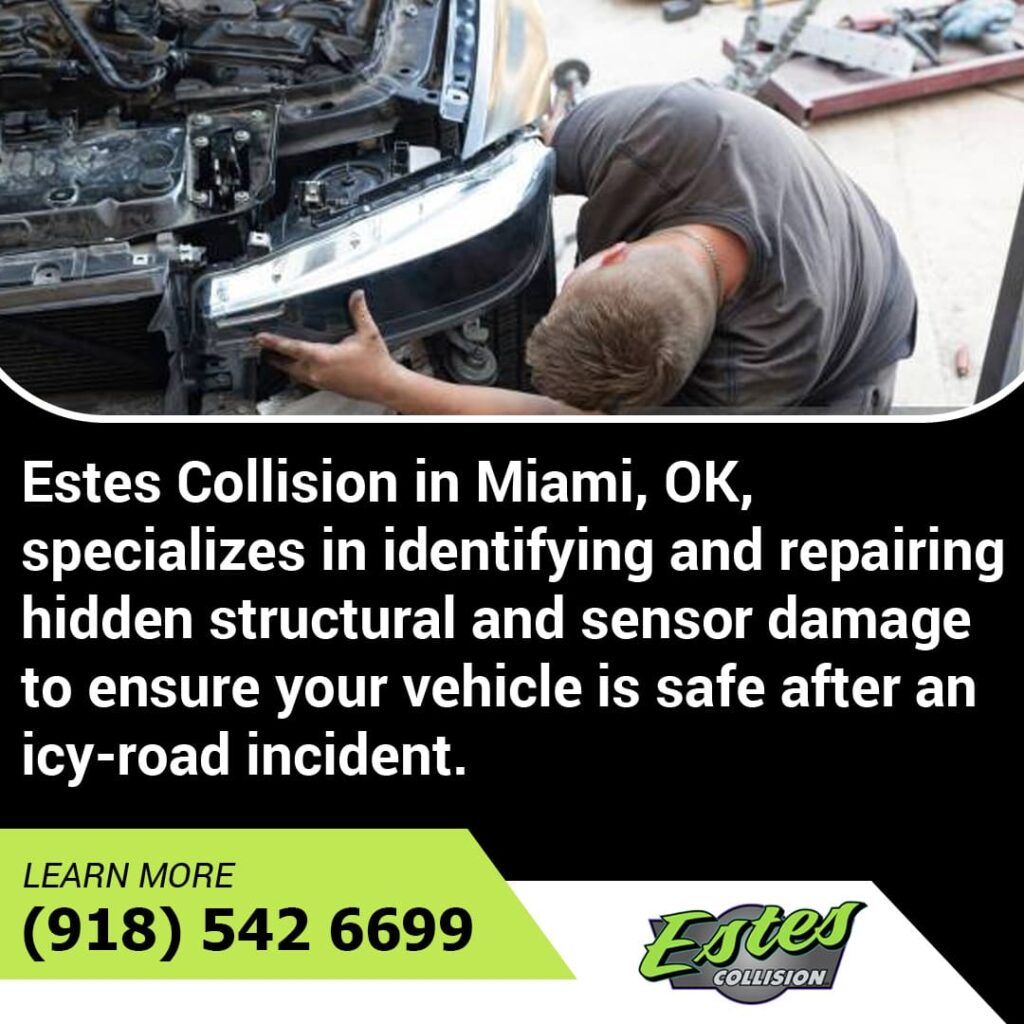
Winter fender benders typically involve low-speed impacts between vehicles or with stationary objects during icy, snowy, or foggy conditions. In Northeast Oklahoma, where Miami is located, these incidents increase when freeze-thaw cycles create treacherous black ice on rural roads and unexpected temperature drops catch drivers off guard.
Estes Collision has been repairing winter collision damage since 2015, and we understand the unique challenges winter weather creates for drivers in our region. A study in Accident Analysis & Prevention using U.S. crash data (1975–2000) showed that first snowfalls raise fatal crash rates over later snowfalls of matching intensity. Understanding the most common types of collision repair work following winter fender benders helps insured owners of late-model vehicles make informed decisions about getting their vehicles back to safe, pre-accident condition.
Why Winter Leads to More Fender Benders in Oklahoma
The state experiences a notable increase in weather-related vehicle collisions during the winter months. State Highway Patrol data shows that during major winter storm events, troopers can work over 330 crashes in a single day, with black ice contributing to multiple incidents across the state.
Several factors affect Miami and the surrounding towns during winter:
Sudden temperature drops create hazardous conditions when moisture on roadways freezes rapidly. The region regularly experiences morning temperatures well below freezing following warmer afternoons, setting up ideal conditions for black ice formation on bridges and overpasses.
Early-morning ice patches form in shaded areas where sunlight doesn’t reach. Rural highways common in Ottawa County often have tree-covered sections that remain icy long after exposed areas have thawed.
Low visibility in rural areas becomes dangerous when fog combines with winter precipitation. Without streetlights on many county roads, drivers struggle to see upcoming hazards or other vehicles.
Even low-speed impacts during these conditions can cause structural damage or affect modern safety systems. Sensors embedded in bumpers, cameras for parking assistance, and collision avoidance technology are all vulnerable to winter fender benders. What appears to be minor cosmetic damage often requires professional assessment to verify that safety systems remain fully operational.
Most Common Winter Fender Bender Repairs in Oklahoma
Based on our repair work during winter seasons, these are the most common repair categories we see:
- Bumper collision repair for both visible and internal component damage
- Paintless dent repair for low-speed impacts that don’t crack paint
- Headlight, taillight, and glass replacement after breakage from impacts or flying debris
- Frame and structural verification after impacts with curbs, medians, or other vehicles
- Cosmetic auto body repair for panels damaged in parking lot incidents
- Complete structural inspections to confirm frame integrity remains within manufacturer specifications
Each repair type addresses specific damage patterns we observe when winter weather contributes to collision conditions. The sections that follow explain what each repair involves and why it matters for vehicle safety and value.
Bumper Collision Repair After Low-Speed Impacts
Bumper systems on modern vehicles contain multiple components designed to absorb impact energy and protect more expensive parts behind them. The visible bumper cover is only the outer layer. Behind it sit energy absorbers, reinforcement bars, mounting brackets, and increasingly, electronic sensors for parking assistance and collision avoidance systems.
When winter collisions occur, internal bumper damage often exists even when the outer cover looks relatively intact. Foam energy absorbers can compress permanently, reinforcement bars can bend, and mounting points can crack. These hidden issues reduce the bumper’s ability to protect your vehicle in subsequent impacts.
Insurance-approved collision repair requires thorough documentation of all damage, including components that aren’t immediately visible. We photograph every stage of disassembly and coordinate directly with adjusters to confirm that all necessary repairs receive authorization.
Late-model vehicles present additional considerations. Parking sensors, backup cameras, and forward collision warning sensors are frequently mounted in or near bumpers. Industry tests (including IIHS low-speed tests) show that even low-speed impacts can lead to costly repairs, often exceeding typical insurance deductibles, especially on late-model vehicles with advanced technology.
Low-Speed Collision Impact Results
| Test Speed | Average Damage Cost | Most Affected Components |
| 3 mph corner impact | Around or slightly below $1,500 | Headlights, fenders, corner sensors |
| 6 mph full-width front | $1,200-$2,500 | Bumper systems, grilles, cooling systems |
| 6 mph full-width rear | $900-$2,200 | Taillights, bumper systems, parking sensors |
Paintless Dent Repair for Snow- and Ice-Related Vehicle Damage
Paintless dent repair (PDR) works well for certain types of winter collision damage. This technique removes dents by carefully manipulating the metal from behind the panel, preserving the original factory paint. PDR becomes an option when the paint finish remains intact, and the metal hasn’t creased or stretched beyond what the process can correct.
Winter parking lot incidents frequently create ideal conditions for PDR. Door dings from adjacent vehicles sliding on ice, minor impacts with shopping cart corrals, and small dents from backing into snow banks often qualify for this repair method.
We evaluate every dent to determine PDR suitability. Factors include dent location, metal thickness, paint condition, and whether the dent is accessible from behind. According to the Federal Highway Administration, nearly 24% of weather-related vehicle crashes occur on snowy, slushy, or icy roads, where average travel speeds decrease by 30 to 40 percent. Most collisions in these winter conditions happen at lower speeds, resulting in damage that paintless dent repair can effectively address.
PDR offers several advantages when applicable. The repair typically completes faster than traditional bodywork. It costs less because it doesn’t require paint materials or refinishing labor. It maintains your vehicle’s original factory finish. For lease vehicles or those you plan to sell, keeping factory paint intact helps maintain resale value.
However, PDR cannot fix every dent. Damage near panel edges, creased metal, or situations where paint has chipped or cracked require traditional repair methods. We provide honest assessments about which approach suits your specific damage.
Glass and Lighting Replacement After Winter Collisions
Winter creates two distinct types of glass damage. Impact cracks result from collisions, while cold cracks form when rapid temperature changes stress already-weakened glass. Both require prompt attention because compromised glass reduces vehicle structural integrity and creates visibility hazards.
Windshield replacement is common after winter fender benders. Even minor front-end impacts can crack windshields, especially when stress points already exist from rock chips or earlier damage. Side and rear glass frequently breaks during sliding collisions or when vehicles back into obstacles obscured by snow.
Local conditions contribute to glass damage frequency. Sand and gravel spread on icy roads become projectiles when other vehicles’ tires throw it against your windshield. Sleet pellets driven by wind create additional impact points. The mix of rural highways and winter weather maintenance practices in our area means your vehicle regularly encounters these hazards.
Headlights and taillights commonly break during low-speed winter incidents. Icy parking lot collisions, sliding into curbs, or backing into concealed obstacles all put lighting assemblies at risk. Modern vehicles use expensive LED or HID lighting systems that cost significantly more to replace than older halogen bulbs.
We handle all types of automotive glass replacement, from windshields to side glass to back glass. Our technicians follow manufacturer-approved installation procedures and use proper sealing techniques to restore your vehicle’s structural integrity and maintain factory safety standards.
Auto Body Panel Repair for Cosmetic Winter Damage
Quarter panels, doors, and fenders sustain damage from the types of impacts that occur in icy parking lots and on snow-covered streets. Sliding collisions at low speeds create dents, scrapes, and crumpled metal that require panel repair or replacement.
Paint matching presents specific considerations for winter body panel repairs. We use world-renowned Sikkens paint combined with electronic color-matching tools to achieve results that blend seamlessly with your vehicle’s original finish. This matters particularly for late-model vehicles where paint quality and precision directly affect resale value.
Factory paint finishes vary based on the painting process used during manufacturing, environmental conditions during application, and even the specific paint batch mixed for your vehicle’s production run. Electronic scanning equipment measures your paint’s exact color, accounting for any fading from sun exposure or age. This data drives the paint formula we mix for your repair.
Late-model vehicles often require following the Original Equipment Manufacturer (OEM) procedures for panel alignment and attachment. Modern vehicle bodies use specific adhesives, welding techniques, and fastener torque specifications that differ from older vehicles. Deviating from these procedures can affect structural integrity, corrosion protection, and how your vehicle performs in future collisions.
Structural Checks and Frame Evaluation After a Winter Fender Bender
Even seemingly minor winter impacts can affect unibody pinch welds, frame rails, or structural mounting points that control how your vehicle drives and protects you. Sliding into curbs transfers force through components into frame mounting points. Low-speed front or rear impacts can shift critical structural elements.
We use computerized measuring systems that compare your vehicle’s current dimensions against manufacturer specifications. These systems check dozens of measurement points across your vehicle’s structure, identifying deviations as small as a few millimeters. That level of precision matters because frame damage that doesn’t cause obvious driving problems can still compromise crash protection.
Hidden structural damage reveals itself through symptoms that drivers might not immediately connect to collision damage. Uneven tire wear patterns, steering pulls, or unusual noises when driving over bumps can all indicate frame or structural issues requiring professional inspection and frame straightening.
According to studies tracking minor collision repairs, 10 to 30 percent of low-speed impact cases reveal hidden structural damage once vehicles undergo thorough inspection. This data comes from collision reconstruction experts analyzing thousands of repair cases across various vehicle types and impact scenarios.
Signs Indicating Need for Frame Inspection
| Observable Symptom | What It May Indicate |
| Vehicle pulls to one side while driving straight | Possible frame misalignment |
| Uneven tire wear patterns | Structural shift affecting wheel positioning |
| Doors don’t close smoothly or latch properly | Body structure out of tolerance |
| Visible gaps between body panels | Frame or unibody distortion |
| New rattles or squeaks over bumps | Loose structural mounting points |
Note: These symptoms indicate the need for professional frame inspection and potential frame straightening services.
How Winter Fender Bender Repairs Are Diagnosed at Our Auto Collision Shop
Our diagnostic process follows a systematic approach. Visual inspection identifies obvious damage. We photograph everything for documentation purposes and to create clear communication with insurance adjusters.
Measuring and frame straightening assessments use computerized equipment. Lasers and electronic sensors gather precise data about your vehicle’s current structural dimensions. We compare these measurements against factory specifications stored in our system’s database.
Modern vehicles present additional diagnostic considerations. Winter collisions can affect structural components that aren’t immediately visible. Our thorough inspection process examines all impact areas to identify hidden damage that could compromise vehicle safety or performance. We follow manufacturer guidelines to verify structural integrity before beginning repairs.
Insurance photos and documentation requirements vary by carrier. We’ve worked with most major insurance companies and understand what documentation they need to process claims efficiently. This coordination helps avoid delays while your vehicle awaits repair authorization.
Working With Insurance After Collision Repair From a Car Accident
Insurance-approved collision repair involves clear communication between our shop, you, and your insurance company. We serve as your advocate throughout the claims process, explaining what repairs your vehicle needs and why they’re necessary for safe operation.
Most insurance policies cover collision damage, but you’ll need to pay your deductible. Some policies include reduced or waived deductibles for glass-only claims. Understanding your specific coverage helps set accurate expectations about out-of-pocket costs.
Adjuster communication happens both digitally and in person. Many insurers now use photo estimating, where you submit pictures through their app. Adjusters review these photos and issue initial repair authorizations. Supplemental damage discovered during repairs requires additional authorization, which we handle by documenting findings and communicating directly with adjusters.
Timeline expectations depend on several factors. Parts availability, particularly for late-model vehicles, affects how quickly repairs are completed. Winter weather can delay parts shipments. We keep you informed throughout the process and provide realistic completion estimates based on current circumstances.
As a facility providing full-service collision repair, Estes Collision coordinates directly with most insurance companies except Allstate. We’ll discuss any carrier-specific considerations during your estimate.
Why Choosing the Best Collision Repair Shop in Miami, OK Matters in Winter Accident Season
During high-volume winter months, choosing dependable auto collision repair shops becomes particularly important. Quality shops maintain consistent standards even when demand increases following winter storms.
OEM procedures matter for modern vehicle repair. We follow manufacturer specifications for structural repairs, paint application, and safety system recalibration. These procedures exist because manufacturers engineered vehicles to specific standards that protect occupants and preserve proper function.
Safety-system scanning identifies issues beyond visible damage. We verify that airbag systems, collision avoidance features, and electronic stability control all function properly before returning your vehicle. This step has become a fundamental part of professional collision repair as vehicles incorporate more advanced safety technology.
Our limited lifetime warranty applies as long as you own your vehicle. This warranty covers the quality of our workmanship and materials. It demonstrates our confidence in the repairs we perform.
As a member of the Oklahoma Auto Body Association (OKABA), we maintain industry connections that support quality work. OKABA membership provides access to technical training, OEM repair procedure updates, and industry best practices that benefit every vehicle we repair.
Our brand-new, state-of-the-art facility contains modern equipment designed for today’s vehicles. Computer-guided measuring systems, frame-straightening equipment, and paint mixing technology allow us to perform repairs that meet current vehicle manufacturing standards.
How to Prevent Repeat Winter Fender Benders
Reducing collision risk during winter requires adjusting driving habits to match road conditions. These practices help avoid situations where collisions become likely:
Slow in shaded areas where ice persists after sunny spots have thawed. Bridges, overpasses, and tree-covered road sections stay frozen longer. Reduce speed before entering these areas rather than braking while already on ice.
Check tire condition before winter weather arrives. Worn tires lose traction faster on slick surfaces. Tread depth below 4/32 inch significantly reduces winter traction. Consider whether all-season tires provide adequate grip for the winter conditions you’ll encounter.
Keep distance on rural highways to allow extra stopping room. Following distances that work in dry conditions prove inadequate on ice. Double or triple your normal following distance when roads might be slick.
Clear ice from sensors and bumpers before driving. Modern safety systems rely on clean sensors to function properly. Ice buildup blocks parking sensors, backup cameras, and collision avoidance systems, reducing the protection these systems provide.

When to Seek Professional Collision Repair After a Winter Fender Bender
Several signs indicate you should schedule an inspection even if damage seems minor:
Steering issues show when your steering wheel sits off-center while driving straight, or your vehicle pulls to one side. Both symptoms can result from frame damage requiring professional frame straightening.
Tire wear changes that develop after a collision suggest structural issues. Uneven tread wear across a tire’s surface or different wear patterns between left and right tires indicate the need for frame inspection.
New noises, including squeaks, rattles, or clunks that weren’t present before the collision, can indicate loose components or structural damage requiring attention.
Panel gaps that appear uneven or different from before the accident suggest the body structure has shifted. Doors, hoods, or trunk lids that don’t close smoothly require professional evaluation and repair.
Sensor warnings appearing on your dashboard after a collision indicate affected safety systems. Don’t ignore these warnings. They signal components that need professional diagnosis and repair.
Protect Your Vehicle with Professional Winter Collision Repair in Miami, OK
Timely repair after winter accidents prevents minor damage from becoming major problems. Contact Estes Collision at (918) 542-6699 to schedule a winter damage assessment. We offer 15 to 30-minute free estimates that identify all damage, including issues not immediately visible. You can also reach us by email at [email protected].
As the best collision repair shop in Miami, OK, we take the drama out of collision repair by providing clear communication, working directly with your insurance company, and following OEM procedures that restore your vehicle correctly. Our facility at 418 S Main Street in Miami, OK, serves drivers throughout Ottawa County and surrounding communities, including Baxter Springs, Commerce, Fairland, Afton, Vinita, Grove, Wyandotte, and Quapaw.