
Synopsis
Estes Collision explains what vehicle owners should expect during professional collision repair, from inspection through final delivery. We outline how safety, structure, and manufacturer procedures guide every step, while clarifying insurance coordination and repair timelines for late-model vehicles after an accident.
Key Takeaways
- Collision repair restores safety, not just appearance
- Hidden damage is common after crashes
- Repair plans follow OEM procedures
- Modern bumpers involve sensors and structure
- Insurance approval does not override proper repairs
After a car accident, it’s normal to feel uncertain about the repair process. You may be wondering how damage is evaluated, how insurance fits in, and whether your vehicle will be safe again. Professional collision repair focuses on restoring safety, structure, and function, not just appearance.
According to NHTSA data, U.S. police reported about 6.14 million motor vehicle crashes in 2023, of which approximately 4.40 million involved property-damage-only (no injury) collisions, the largest category of reported crashes. Many of these require collision repair to restore vehicles properly.
Estes Collision has been providing drivers in and around Miami, OKlahoma, with full-service collision repair since 2015. In 2025, we opened a new, more advanced repair facility to handle modern vehicle repair needs. We explain what you should expect during collision repair so you can move forward with clarity.
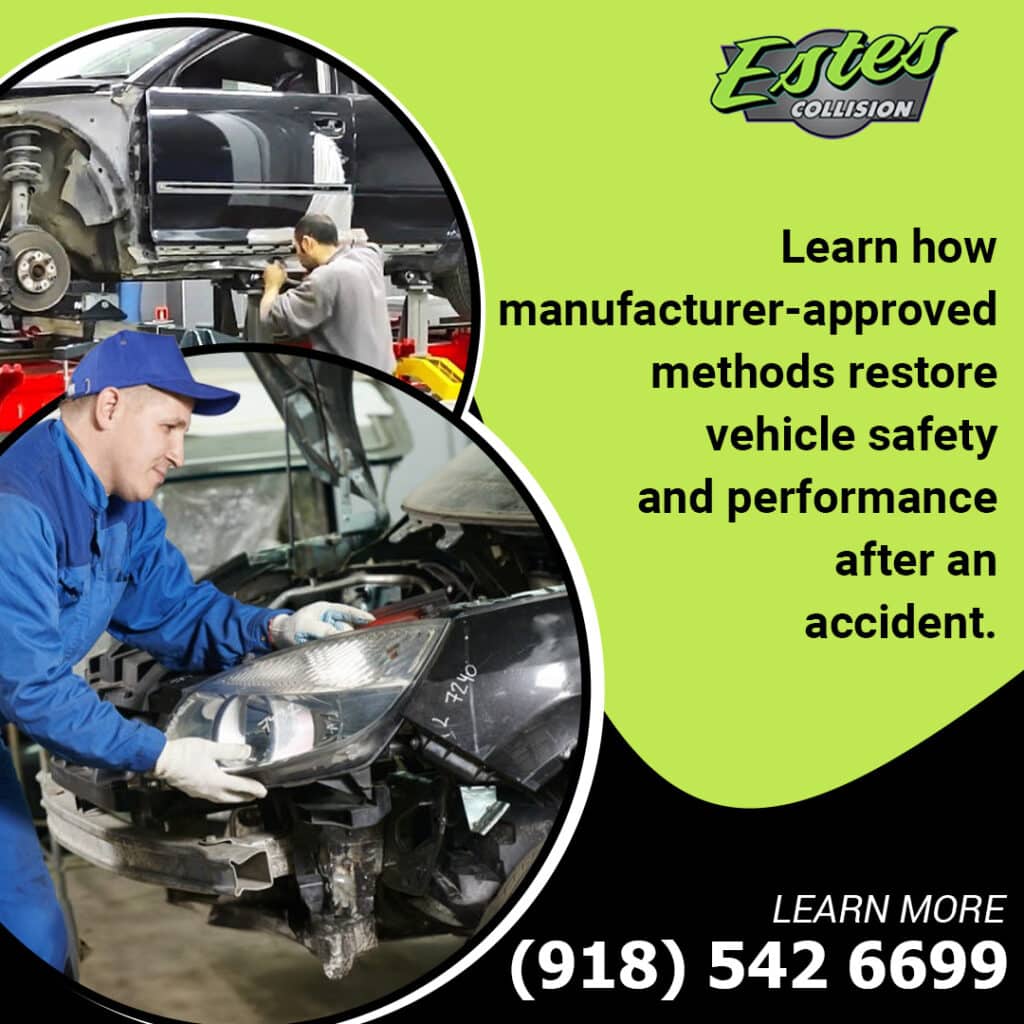
What Is Professional Collision Repair?
Professional collision repair is the process of restoring a damaged vehicle to its original structural integrity and appearance using manufacturer-approved methods and quality materials. Unlike quick cosmetic fixes, this type of repair addresses both visible and hidden damage to ensure your vehicle performs safely on the road.
The difference matters particularly for late-model vehicles. Modern cars contain advanced safety systems, sensors, and computer-controlled components that require precise repair procedures. Professional repair shops follow Original Equipment Manufacturer (OEM) guidelines to maintain these systems. This approach protects the structural zones designed to absorb impact during a collision and keeps safety features functioning as intended.
Proper collision repair directly affects how well a vehicle protects occupants in subsequent crashes. When structural repairs are rushed or incomplete, the vehicle’s ability to manage crash forces diminishes significantly.
What Happens Right After a Collision Repair Appointment Is Scheduled
Once you schedule your appointment, the auto collision repair process begins with documentation and planning. This initial phase sets the foundation for accurate repairs.
Initial Damage Inspection and Documentation
Your vehicle receives a thorough inspection to identify all damage, including issues not visible at first glance. We provide free estimates that typically take 15 to 30 minutes. During this time, our technicians examine the exterior panels, undercarriage, frame, and mechanical components. They photograph the damage and document every affected area.
Hidden damage is common after collisions. Impact forces can travel through the vehicle’s structure and affect areas far from the visible damage point. A front-end collision might shift the frame slightly, causing misalignment in door panels or affecting suspension components.
Creating a Repair Plan Based on Vehicle Damage
The repair plan outlines every necessary step based on the specific damage to your vehicle. This plan considers structural repairs, panel replacement or repair, paint work, and parts needed. Repair plans at the best collision repair shops are customized rather than following a generic template.
If you’ve obtained multiple estimates, we review them with you and clarify the specifics. Price variations often arise from parts quality differences, labor calculations, or repair procedures recommended. Lower estimates may omit necessary repairs or compromise on quality. Safety drives every decision in our repair plans. Components affecting your vehicle’s crash protection or operational safety receive priority attention regardless of visibility.
Understanding the Full Service Collision Repair Process
Full-service collision repair covers everything from initial assessment through final quality checks. The process follows a logical sequence to deliver thorough, lasting repairs.
Disassembly and Structural Evaluation
Technicians remove damaged panels and components to access the underlying structure. This disassembly reveals the full extent of damage and allows precise measurements of your vehicle’s frame and body structure.
During structural evaluation, computerized measuring systems compare your vehicle’s dimensions against manufacturer specifications. Even small deviations affect how the vehicle drives and protects you in another accident. We use advanced technology to identify structural issues not visible from the outside.
Structural and Panel Repairs
Frame correction restores your vehicle’s structural integrity using specialized hydraulic equipment. This equipment applies controlled force to bent or shifted frame sections, returning them to exact specifications. We follow OEM procedures to maintain the engineered strength your vehicle was designed with.
Panel repair or replacement follows structural work. Our technicians decide whether to repair or replace panels based on the extent of damage and manufacturer recommendations. Some panels can be straightened and refinished, while others require replacement to maintain proper fit and function.
Bumper collision repair often happens during this stage. Modern bumpers contain reinforcement bars, sensor brackets, and mounting points that must align precisely with the repaired structure.
Reassembly and Safety Checks
Components are reinstalled with attention to proper alignment and function. Doors, hoods, and trunk lids must close evenly with consistent gaps. Mechanical components like suspension parts, steering linkages, and brake systems are checked for operation.
Safety systems, including airbag sensors, collision warning sensors, and stability control components, receive verification testing. These systems must function correctly to protect you after repairs are complete.
Bumper Collision Repair: What Makes It More Complex Than It Looks
Modern bumpers contain sensors, reinforcement structures, and mounting systems that require careful handling during repairs. What appears as simple bumper damage often involves multiple components behind the visible cover.
Late-model vehicles integrate parking sensors, collision warning radar, and camera systems into bumper assemblies. These components must be properly calibrated after bumper collision repair. The bumper reinforcement bar absorbs impact energy during collisions, and any bending or damage compromises this protection.
Bumper Standard in the Code of Federal Regulations requires passenger vehicles to resist low-speed collisions (up to 2.5 mph impacts), minimizing damage to safety-related components like lights and fuel systems. When repairs don’t restore proper alignment and sensor function, the vehicle’s ability to detect hazards can be compromised.
We make sure that mounting brackets and attachment points align exactly with the repaired structure. Our technicians follow OEM procedures during bumper repairs to maintain your vehicle’s safety systems.
| Bumper Repair Phase | Key Components | Why It Matters |
| Cover Removal | Sensors, cameras | Calibration required |
| Reinforcement Check | Steel/aluminum bar | Absorbs impact energy |
| Bracket Alignment | Mounting points | Determines stability |
| System Testing | Warning systems | Safety feature function |
How Insurance-Approved Collision Repair Works
Insurance-approved collision repair means the repair shop and insurance company have agreed on the necessary work and associated costs. Understanding this process helps you during the claims experience.
Working With Insurance Adjusters
Insurance adjusters inspect your vehicle and create an initial damage estimate. This estimate covers visible damage but may not include hidden issues discovered during disassembly. We document any additional damage and work with the adjuster to get approval for complete repairs.
The term “insurance approved” refers to the adjuster’s agreement that specific repairs are necessary. It does not mean you must accept incomplete repairs or substandard parts if additional work is needed. We work directly with most insurance companies to simplify the claims process for you.
Your Rights as the Vehicle Owner
You have the right to choose where your vehicle is repaired, regardless of insurer recommendations. Insurance companies may suggest specific shops, but Oklahoma law allows you to select any licensed repair facility.
Proper repairs matter more than convenience to the insurer. Cutting corners to meet an initial estimate can leave your vehicle structurally compromised or with faulty safety systems. At Estes Collision, we communicate directly with insurance companies so that approved repairs meet manufacturer standards and restore your vehicle’s safety.
Typically, your deductible is applied according to your insurer’s policy terms, often at pickup or through direct payment arrangements, and we will review this with you during the repair process. This timing allows you to inspect the work before making payment.
| Right | Description |
| Shop Choice | Policyholders decide repair location; insurers cannot steer. |
| Parts Disclosure | Notification required for non-OEM parts used. |
| Repair Estimates | Owner approval needed for hidden damage repairs. |
| Documentation | Detailed invoices were provided post-repair. |
OEM Procedures and Parts During Collision Repair
OEM procedures are repair methods specified by the vehicle manufacturer to maintain structural integrity and safety system function. These procedures exist because each vehicle model has unique design characteristics, materials, and safety features.
Late-model vehicles use high-strength steel, aluminum, and composite materials in specific locations. Each material requires different welding techniques, adhesives, or fastening methods. By following OEM procedures, our repairs maintain the engineered strength of these materials and keep your vehicle safe.
We use a combination of OEM-manufactured parts and qualified aftermarket parts during repairs. OEM parts are made by your vehicle’s manufacturer and match original specifications exactly. Qualified aftermarket parts meet industry standards for fit, finish, and function. The choice depends on your vehicle’s needs, insurance coverage, and manufacturer recommendations. We always explain which parts we’re using and why.
Paint Matching and Refinishing After Collision Repairs
Modern vehicles require precise color-matching techniques to blend new paint with the existing finish. Paint color varies slightly based on sun exposure, age, and original application, so matching requires more than selecting the factory color code.
We use electronic color-matching tools to scan your vehicle’s paint and create a custom formula. This formula accounts for any fading or color shift that occurred over time. Our technicians blend the new paint into adjacent panels to eliminate visible transition lines.
We use world-renowned Sikkens paint, known for durability and color accuracy. This provides a perfect paint match for your vehicle. Multi-stage paint systems used on newer vehicles include basecoat color layers and clearcoat protective layers that must be applied in specific sequences. Proper refinishing protects the repaired area and maintains your vehicle’s appearance and value.
Final Quality Checks Before Your Vehicle Is Returned
Every repaired vehicle undergoes inspection to verify that all work meets quality and safety standards. This inspection covers alignment, panel fit, paint consistency, and operational testing of all affected systems after professional collision repair.
Our technicians check door alignment, hood and trunk closure, and body panel gaps for consistent spacing. Test drives verify steering response, brake function, and any electronic systems affected by the collision.
The vehicle receives a thorough cleaning to remove repair dust and residue. We inspect the interior for any items removed during repairs and return everything to its proper place. This attention to detail reflects our commitment to treating your vehicle like our family car before you pick it up.
How Long Collision Repair Takes and What Can Affect the Timeline
Repair timelines vary based on damage extent, parts availability, and the discovery of hidden issues during disassembly. Minor repairs might take a few days, while extensive structural work can require several weeks.
Parts availability affects timelines considerably. Some components for newer vehicles must be ordered from manufacturers, which can add days or weeks to the process. We keep you informed about any delays and provide timeline updates throughout the collision repair process.
The complexity of damage also impacts duration. What initially appears as moderate damage might reveal additional structural issues once panels are removed. These discoveries require adjuster approval and parts ordering, which extends the original timeline. Too many variables exist to provide exact timeframes upfront. We assess your specific vehicle and communicate realistic expectations based on the actual damage found.
Choosing the Best Collision Repair Shop in Miami, OK
The best collision repair shop combines technical capability, proper equipment, and commitment to manufacturer repair standards. When selecting a shop after a car accident, consider their certifications, facility capabilities, and reputation for quality work.
Look for shops that follow OEM repair procedures and invest in ongoing technician training. Modern vehicles require specialized tools and knowledge that not all auto collision shops possess. Membership in professional organizations like the Oklahoma Auto Body Association indicates a commitment to industry standards and continuous education.
We serve vehicle owners throughout the region, including Commerce, Fairland, Afton, Vinita, Grove, Wyandotte, Quapaw, and Baxter Springs, KS. Our focus is on delivering repairs that restore safety and function, not just appearance.
Why Estes Collision Is Trusted for Collision Repair After a Car Accident
Since 2015, we have been providing collision repair services and building our reputation on quality work and clear communication. Our team follows OEM procedures and uses precision equipment to restore vehicles to manufacturer specifications.
Our new advanced repair facility is equipped with updated technology and designed specifically for modern vehicle repairs. This investment reflects our commitment to serving our customers with the best tools and capabilities available. Membership in professional organizations like the Oklahoma Auto Body Association indicates a commitment to industry standards and continuous education. We serve vehicle owners throughout the region, including Commerce, Fairland, Afton, Vinita, Grove, Wyandotte, Quapaw, and Baxter Springs, KS.
Our technical capabilities, proper equipment, and commitment to manufacturer repair standards make Estes Collision the best collision repair shop in Miami, OK. We take the drama out of collision repair by combining technical expertise with transparent communication.

What You Should Expect From Professional Collision Repair
Quality collision repair should provide clear communication, thorough work, and attention to both visible and structural damage. You deserve to understand what’s happening with your vehicle and feel confident that the repairs restore its safety and function.
After a car accident, choosing a shop that prioritizes proper repair procedures over speed protects your investment and your safety. If you need collision repair after a car accident in Miami, OK, or surrounding areas, contact Estes Collision at (918) 542-6699 or email [email protected]. We provide free estimates and answer your questions about the repair process, insurance coordination, and what your specific vehicle needs.