
Synopsis
Minor collision damage can lead to hidden structural, paint, and sensor issues if repairs are incomplete. Estes Collision explains how proper measurement, OEM procedures, and verified inspections prevent long-term problems after auto body repair.
Key Takeaways
- Structural measurement is essential
- OEM procedures protect safety
- Paint prep prevents corrosion
- ADAS sensors require verification
- Final inspections confirm repair accuracy
Minor collision damage can look harmless at first. A shallow dent, a scraped bumper, or a crease in a fender often feels like a cosmetic issue. Many keep driving because the car still feels normal and no warning lights appear.
The problem is that modern vehicles are built around tight tolerances. Body panels are designed to sit in exact positions. Paint is a layered protection system, not just color. Sensors and mounting points rely on precise placement to work as intended. When a repair focuses only on what you can see, small shortcuts can show up later as uneven tire wear, wind noise, corrosion starting at a paint edge, or driver-assist features that do not respond the way you expect.
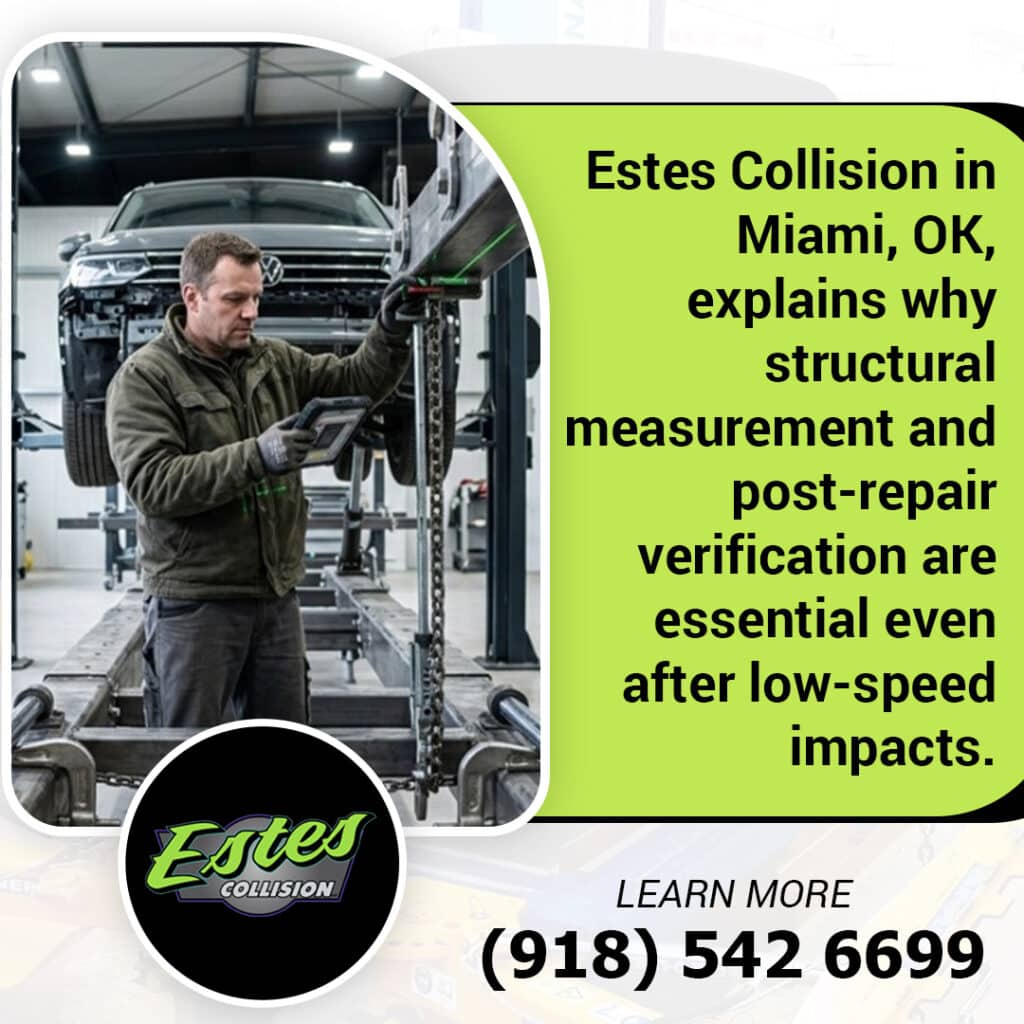
It helps to know what a correct repair includes, even after a low-speed impact. Estes Collision explains how to prevent long-term issues after a minor auto body repair, including what to ask about inspections, OEM repair steps, and post-repair checks that confirm the job was finished correctly. Our auto body shop in Miami, OK, works with insurance companies, follows OEM procedures, and backs our workmanship with a limited lifetime warranty for as long as you own the vehicle. Our auto body repair services cover everything from frame measurement and structural correction to paint refinishing, glass replacement, and paintless dent removal.
Why Minor Auto Body Damage Can Turn Into Larger Problems
Small Impacts and Structural Alignment
Most vehicles on the road today are built using a unibody frame: a construction method where the body panels and structural frame form one integrated unit. Every section of that structure simultaneously carries load and maintains alignment, so when any part shifts, the whole system is affected.
A minor rear-end impact or a low-speed parking lot collision can displace parts of that structure by only a few millimeters; enough to alter how the suspension handles road load, how weight transfers across the tires, and how the vehicle tracks at speed. The change is rarely visible right away. It reveals itself gradually through a steering wheel that drifts off center, one tire wearing faster than the other, or a door that no longer closes cleanly.
Frame measurement after any collision is not reserved for serious crashes. On a proper auto body frame repair evaluation, it is the starting point.
What the Crash Data Tells Us About Low-Speed Impacts
| Crash Category | 2023 Data* | Practical Implication |
| Total police-reported crashes | 6.14 million (up 3.5% from 2022) | A significant number involve low-severity impacts that drivers may underestimate |
| Property-damage-only crashes | Up 4.2% from 2022 | These carry the highest risk of incomplete or deferred repair |
Reference: *NHTSA Crash Data
When a low-severity collision is followed by an incomplete repair (one that skips structural measurement, cuts short the paint process, or skips a final inspection), the vehicle may look correct but perform differently from how it should. That gap between appearance and actual condition is where long-term problems begin.
What Causes Long-Term Problems After Auto Body Damage Repair?
Structural Checks That Get Skipped
When a shop focuses only on what is visible, the frame can go unchecked. Body panels get filled, sanded, and painted, while a slight structural deviation stays in place underneath.
That deviation does not stay minor. It changes how the suspension loads with every bump, shifts tire contact angles, and creates uneven stress across components not designed to carry it. A vehicle that pulls to one side after a repair, or that starts wearing tires faster on one end, is a common sign that frame measurement was either not done or not done with the right equipment. On structural repairs, we use precision measuring equipment and follow OEM procedures to verify your vehicle’s frame against manufacturer specifications.
Paint Prep and Corrosion Protection
Bare metal exposed after collision damage starts corroding right away. Oklahoma weather does not demand the harshest conditions for this to happen. Road moisture, seasonal rain, and the temperature swings between a hot summer and a cold winter are enough to accelerate rust on unprotected surfaces.
A proper refinishing process cleans exposed metal thoroughly, applies the correct primer before any topcoat goes on, and allows the finish to cure at the right temperature and for the right amount of time. Shortcuts in paint preparation, particularly on inner panels, seams, and the edges of repairs, result in paint that bubbles, separates, or develops rust beneath the surface within a single season. We use Sikkens paint and electronic color-matching tools on every job that requires refinishing, producing a finish that holds to factory standards in color accuracy and long-term durability.
What Drivers Should Know About Sensors and Collision Repairs
Most late-model vehicles come equipped with ADAS (Advanced Driver Assistance Systems). This group of technologies includes automatic emergency braking, lane departure warning, blind spot monitoring, and adaptive cruise control. These systems depend on cameras, radar units, and sensors mounted at precise positions within bumpers, windshields, and body panels.
When any of those panels are repaired or replaced, sensors attached to them can shift. Research using NHTSA-standardized test procedures found that skipping lane departure warning calibration after a repair caused complete system failure, while imprecise calibration led to inconsistent emergency braking performance.
Before authorizing any auto body repair, ask the shop whether OEM procedures for your specific make and model call for post-repair sensor verification. Any shop following OEM guidelines will have a direct answer and should document it as part of the repair record.
How OEM Repair Procedures Protect You
OEM (Original Equipment Manufacturer) refers to the company that built your vehicle. OEM repair procedures are the manufacturer’s documented methods for repairing each specific make and model correctly. They define repair tolerances, approved materials, and structural measurement specifications unique to that vehicle.
Following OEM procedures means your vehicle is returned to factory safety standards, not just to a close approximation. This is especially relevant for minor auto body repair — where correct structural assessment and paint preparation from the start protect your vehicle’s long-term condition and value.
When a repair follows OEM guidelines, you get:
- Structural corrections were made to the tolerances your vehicle was designed around
- Repair methods suited to the specific materials and construction of each panel
- Parts that fit and perform the way the original components did
- A repaired vehicle that handles and protects the way it was designed to in any future impact
At Estes Collision, we apply OEM procedures to every repair, from panel replacement and frame straightening to paintless dent removal and glass replacement. We work with both OEM-manufactured parts and qualified aftermarket parts, depending on your vehicle and insurance coverage, and we explain the difference before any work starts. Every repair we complete comes with a limited lifetime warranty on workmanship, valid for as long as you own the vehicle.
Post-Repair Checks That Keep Problems From Developing
A repair is not finished when the body looks right. These checks are part of the auto body repair services we provide on every job.
Structural and Frame Verification
Frame and structural conditions do not correct themselves after a collision. After any repair involving structural work, we verify that frame measurements align with manufacturer specifications. Even a small deviation affects how the vehicle tracks, how weight transfers across the tires, and how the suspension responds under load. Catching these deviations before the vehicle leaves the shop is what separates a complete repair from one that creates problems later.
Paint Cure and Finish Quality Check
Paint curing is time-dependent and temperature-dependent. A finish that has not cured properly looks fine at first but begins failing within months: peeling at edges, fading unevenly, or cracking along repair seams as temperatures change. We inspect every painted surface for color match, surface consistency, and finish quality before the vehicle is returned to you. We use Sikkens paint and electronic color-matching tools on every refinishing job to confirm the result meets factory standards.
Final Quality Review
Before any vehicle leaves our facility, our technicians go over the repair to confirm it meets our quality standards. This review covers areas such as:
- Frame measurements checked against manufacturer specifications
- Panel fit and body line consistency around doors, fenders, the hood, and lights
- Door operation confirmed for proper fit and function
- Replaced or repaired components checked for correct installation
- Paint finish reviewed for color accuracy and surface condition
We follow OEM procedures on every repair, and that includes confirming the vehicle is road-ready before it is returned to you.
Why Northeastern Oklahoma’s Weather Makes Complete Repairs More Important
Spring storm activity across this part of Oklahoma brings hail season every year. Hail dents that look cosmetic often have cracked clearcoat at their edges. Once moisture gets into those cracks, rust develops beneath the paint surface, invisible until it has already spread across a wider area.
Seasonal temperature variation adds a second layer of risk. Paint applied without adequate surface preparation or cured under the wrong conditions expands and contracts unevenly through the seasons. Over time, that creates micro-cracking that admits moisture. A properly applied and fully cured paint system handles Oklahoma’s temperature range without issue.
Rural roads throughout this area may also take a toll on vehicles already compromised by incomplete body repairs. Gaps in primer or sealant left after a rushed repair create entry points for gravel chips and road moisture. One incomplete repair can make a vehicle more vulnerable to the next round of damage.
Warning Signs Your Repair May Need a Second Look
If you experienced any impact, even a minor one, ask whether a full auto body frame repair evaluation was completed as part of the original repair. Then schedule a re-inspection at your auto body shop if you notice any of the following:
- The steering wheel sitting off-center when driving straight points to a structural deviation that was not corrected during the original repair.
- Vehicle pulling left or right while driving or braking; consistent pulling after a repair often indicates a frame measurement that was skipped or fell outside tolerance.
- Wind noise from doors or windows that was not there before. A shift in panel gap alignment commonly causes this after collision work.
- Visible gaps that look uneven around lights, the hood, or doors are a sign that panel alignment was not verified as part of the final check.
- Tires wearing faster or unevenly on one side can be a recognizable result of structural deviation left uncorrected after auto body damage repair.
- Paint bubbling, peeling, or separating at repair edges indicates a paint preparation or curing issue that will worsen over time if not addressed.
Any of these symptoms after a repair is a reason for a professional re-inspection. Catching the underlying cause early costs far less than addressing what it leads to if left alone.

Choosing the Right Auto Body Shop in Miami, OK
Ask About Industry Membership
Ask whether a shop holds an active membership in a professional body repair association. We are members of the Oklahoma Auto Body Association (OKABA), which means we uphold the highest standards of quality and professionalism in the collision repair industry. Membership is a verifiable signal that a shop is committed to doing the work correctly.
Request a Written, Itemized Estimate
A trustworthy auto body shop gives you a clear written estimate before any work begins. Our estimates are free and take 15 to 30 minutes to complete. We walk you through the scope of repairs, the parts being used, and the costs, so there are no surprises. We also work directly with most insurance companies to keep the claims process simple. A written estimate protects you if questions arise later about what auto body damage repair was authorized and completed.
Confirm Warranty Coverage and Parts Standards
Before authorizing a repair, ask what the warranty covers and how long it lasts. Ask specifically whether OEM repair procedures are followed. Our warranty covers all workmanship for as long as you own the vehicle. We walk you through which parts are being used on your specific repair and explain the reasoning before anything starts.
Take Care of It Before It Becomes a Bigger Problem
Minor auto body repair done to OEM standards with structural verification, proper paint preparation, and a final inspection stops small collision damage from becoming long-term structural and mechanical problems.
If your vehicle has been in a collision and you have noticed any of the symptoms described here, a professional inspection is the right next step. Early diagnosis is faster, simpler, and far less costly than what those symptoms develop into over time.
Drivers in Miami, OK, and the surrounding area are welcome to schedule a free estimate with our team at Estes Collision. Call us at (918) 542-6699 or email [email protected] to schedule auto body repair services in Miami, OK. We are open Monday through Thursday, 7 AM to 5 PM. A limited lifetime warranty backs our services, and we follow OEM procedures. We take the drama out of collision repair.