
Synopsis
Winter temperatures do not prevent quality collision repair when the work is completed in a temperature-controlled facility. Delaying repairs after a winter accident can allow hidden damage, moisture intrusion, and insurance complications to grow, putting your vehicle’s safety and value at risk.
Key Takeaways
- Cold weather does not affect repair quality in indoor, climate-controlled shops
- Winter collisions often cause hidden bumper and structural damage
- Moisture and road salt increase corrosion when repairs are delayed
- Safety systems and crumple zones need timely inspection and repair
- Starting insurance-approved repairs early helps protect your claim
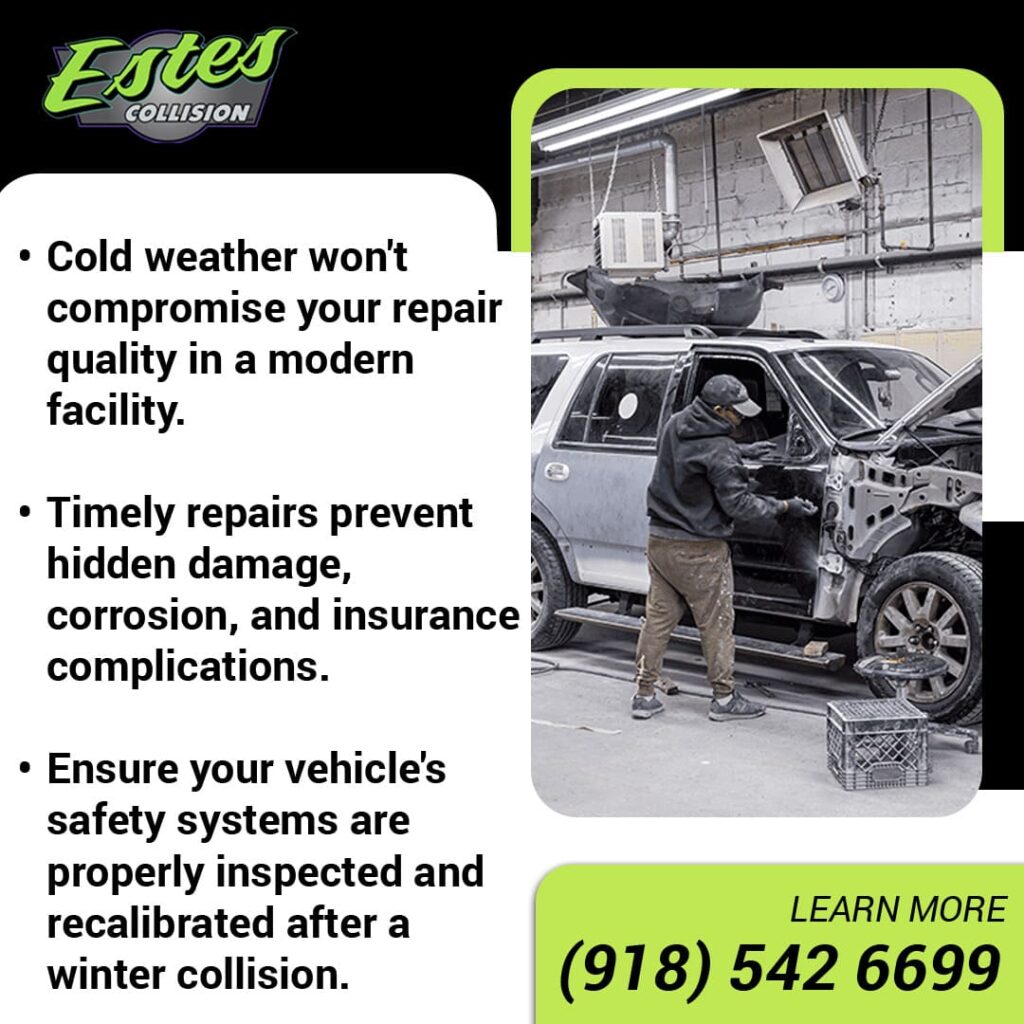
Yes, winter is an appropriate time for collision repair when working with a facility equipped with temperature-controlled workspaces. Cold conditions outside do not affect repair quality at shops that maintain heated paint booths and regulated indoor environments. Drivers around Miami, OK often postpone addressing accident damage during winter, assuming they need to wait for spring. Delaying repairs allows structural problems to worsen, moisture to penetrate damaged areas, and insurance documentation to become complicated. Estes Collision in Miami, OK, completes winter repairs following the identical OEM standards we use during the summer months. We explain how winter crashes affect your vehicle, why professional collision repair produces quality results year-round, and the risks of postponing necessary repairs.
What Happens to Vehicles After a Winter Collision?
Hidden Damage Is More Common Than It Looks
Winter crashes frequently cause structural problems that aren’t visible from outside the vehicle. Slick roads decrease traction and extend braking distances, resulting in impacts that compromise frame rails and connection points. According to the Federal Highway Administration, over 1,300 people die, and more than 116,800 suffer injuries in crashes occurring on snowy, slushy, or icy pavement each year.
Slow-speed winter impacts damage bumper assemblies and energy absorption systems more than most people realize. Your bumper contains mounting hardware and energy-dissipating foam engineered to protect passengers during collisions. Freezing temperatures cause these materials to become fragile and crack more easily. During bumper collision repair at our auto collision shop, we frequently discover hidden bracket damage and crushed foam that can no longer absorb impact energy properly. These hidden issues often require professional collision repair even when surface damage appears minimal.
Cold Weather Makes Minor Damage More Risky
Extreme temperatures accelerate secondary damage when you don’t address initial collision problems. Cold weather may make some plastics more brittle, and freeze-thaw cycles can worsen small cracks, so early inspection helps catch issues before they expand. Components like door handles, exterior trim, and body panels develop fractures under stress. Water enters through compromised seals, creating rust and harming electrical systems.
Postponing repairs leads to multiple connected problems throughout winter. Paint damage lets moisture seep under the finish, triggering corrosion that spreads under areas that look undamaged. Damaged weather stripping allows water and road salt inside door frames. Bent frame sections flex abnormally, stressing undamaged parts. Getting collision repair after a car accident quickly stops these problems from multiplying and prevents the need for more extensive full-service collision repair later.
Does Cold Weather Affect Collision Repair Quality?
Modern Auto Body Shops Control Temperature
Indoor repair facilities eliminate concerns about weather affecting repair quality. Professional collision repair shops maintain controlled work environments where paint application, structural repairs, and refinishing work occur, protected from outdoor conditions. This allows materials to perform as manufacturers designed and procedures to follow OEM specifications. Outside temperature doesn’t interfere when repairs happen in proper indoor facilities built for year-round operation.
Automotive paint systems have manufacturer-specified temperature and humidity ranges for proper application and curing. In professional paint booths, temperature and humidity are controlled to meet these specifications regardless of outdoor conditions, ensuring proper paint performance year-round.
We use world-renowned Sikkens paint, known for its durability and color accuracy, applied following manufacturer specifications for temperature and application procedures.
Why Professional Collision Repair Works in Winter
OEM repair standards themselves don’t change with seasons, but technicians adjust processes (like heating paint booths) to meet those standards in different weather conditions. Vehicle makers specify methods and materials that don’t change based on calendar or weather. We apply these same procedures in January that we use in July at our auto collision shop. Frame repairs, panel work, and automotive painting all happen in protected indoor work areas at our state-of-the-art facility.
Our measurement tools and frame equipment function accurately when properly maintained and used indoors. Computerized measuring systems deliver precise results when operated in appropriate conditions. We store parts, bonding materials, and paint products properly throughout winter. Our facility, operational since 2015, provides a modern workspace designed for quality full-service collision repair year-round.
When You Should NOT Delay Collision Repair in Winter
Safety Systems Require Immediate Assessment
Damaged safety features need attention right away, no matter what season. Today’s vehicles include sensors, cameras, and radar mounted in bumpers and front grilles. Research from the Insurance Institute for Highway Safety shows front crash prevention technology cuts rear-end crashes. Winter impacts often damage or knock these components out of position.
Your vehicle’s crumple zones and bumper assemblies protect you by absorbing crash energy. Damage reduces how well they’ll perform if you have another accident. Reinforcement bars and brackets must match factory specifications. Bent or broken bumper components can’t spread impact forces correctly, raising injury risk.
Insurance Timelines Still Apply
Many insurance policies recommend prompt reporting of damage and beginning repairs to help substantiate claims; terms vary by provider and state law. Prompt action supports a smoother claims process. Policies typically require you to document damage and start repairs within reasonable timeframes. Waiting creates problems when adjusters question if damage came from the reported crash or something that happened later.
Visible damage gets worse when ignored during cold months. Cracks grow larger, and water seeps deeper into damaged areas. Insurers might reduce payments when postponed repairs show damage exceeding original estimates. Getting insurance-approved collision repair started early protects your claim value and prevents authorization delays.
Common Winter Collision Repairs That Should Be Done Right Away
Bumper Collision Repair After Ice or Snow Accidents
Bumper damage from winter crashes looks minor, but it affects complicated systems. Parking sensors and cameras sit behind bumper covers where impacts break brackets and damage wiring. These features stop working after collisions, even when the outer damage appears small.
Impact foam compresses when struck and rarely bounces back to full thickness. This foam sits between your bumper cover and the metal reinforcement bar. Manufacturers designed it to crush during impacts while shielding structural parts. Once compressed, it can’t protect as well next time. Cold temperatures make this foam brittle, causing hidden breaks.
Paint cracks happen more in cold weather because impact stress combines with cold-induced brittleness. Flexible bumper covers develop stress cracks near mounting areas. These openings let water reach metal brackets, starting rust and electrical problems. At our auto collision shop, we regularly find crushed or cracked foam during bumper collision repair on cars with barely visible outer damage.
Frame and Panel Repairs
Frame misalignment develops when the impact force exceeds what the bumpers can absorb. Slow-speed winter crashes on ice often make vehicles hit objects at angles that stress frame components and body structure. These impacts push alignment past acceptable limits, causing uneven tire wear and steering problems.
Changes in how doors fit, or body panel gaps, indicate frame damage needing correction. Doors that stick, uneven spacing, or panels sitting crooked mean the structure underneath has shifted. Winter moisture speeds rust at these stress points when damaged paint or seals expose bare metal. Our vehicle frame straightening service addresses structural alignment and includes rust prevention to stop long-term damage. Getting insurance-approved collision repair quickly after winter accidents protects vehicle safety and value.
How Insurance Claims Work During Winter Accidents
Working With Insurance During Peak Winter Claims
Winter and adverse weather can increase claim volumes in regions that experience snow and ice, potentially affecting estimate and approval timelines. Drivers should document damage and begin the claims process promptly to avoid delays.
Clear accident records speed up processing. Taking photos right after the crash, getting police reports that note conditions, and reporting damage quickly establish your claim’s validity. Thorough documentation from the start leads to smoother approvals at any auto collision shop.
Choosing an Insurance-Approved Auto Collision Shop
Insurance-approved collision repair facilities maintain working relationships with major carriers. We work directly with most insurance companies and understand their requirements for estimates and paperwork. These partnerships speed authorization because insurers trust our work quality. We provide free 15-30 minute estimates to help start the claims process quickly.
Choices between OEM and aftermarket parts affect repair quality and your car’s value. Insurance companies sometimes prefer aftermarket parts to reduce costs. We use both OEM-manufactured parts and qualified aftermarket parts, explaining the differences so you understand when OEM parts better protect safety.
We create detailed estimates listing all needed work. Our team explains why certain repairs matter for safety and documents damage thoroughly for insurance review. This transparency helps you make informed choices and prevents claim disputes during full-service collision repair.
What to Look for in an Auto Body Shop for Cold-Weather Repairs
Indoor Repair Capabilities Matter
Enclosed facilities prevent the weather from affecting your paint finish. Quality shops maintain spray environments, controlling temperature and moisture levels. Choose the best collision repair shop in Miami, OK, with proper indoor booth technology instead of open work areas affected by outside conditions.
We apply world-renowned Sikkens paint, recognized for lasting durability and color accuracy. Our electronic color-matching tools analyze your vehicle’s current paint and create formulas accounting for fading over time. This technology delivers seamless results matching your original color exactly.
Full Service Collision Repair Under One Roof
Shops handling multiple services reduce scheduling problems and repair time. When an auto collision shop performs structural work, automotive painting, and related services at one location, you avoid delays from sending work elsewhere. Vehicle frame straightening, panel work, paint matching, and final assembly happen without moving your vehicle between facilities.
Our equipment includes frame machines and welding capability for unibody and frame work. We complete glass replacement at our facility, maintaining control over quality and timing. This full-service collision repair approach means faster completion and consistent quality throughout the entire process.
Local Experience With Regional Winter Driving Conditions
Driving conditions around Miami, OK, and the surrounding rural areas create particular collision patterns. Farm equipment debris on highways causes damage during winter when visibility drops. Ice impacts happen on country roads receiving less salt treatment than main highways. Commutes between rural towns and Miami expose vehicles to mixed conditions, including gravel and pavement changes.
Operating locally since 2015, we understand regional claim patterns and typical damage throughout northeastern Oklahoma. Our crew includes body technicians Kolton and Sean, paint technician Max, and detailer Ty. Our local experience helps us provide accurate estimates and realistic timelines.

Why Local Drivers Choose Estes Collision During Winter
We apply manufacturer standards consistently throughout the winter months. Founded by Billie and Amanda Estes in 2015, our shop has served Miami, OK drivers with dependable professional collision repair for a decade. As proud Oklahoma Auto Body Association (OKABA) members, we maintain top industry standards for quality and professionalism.
Our newly operational facility offers increased winter repair capacity. Indoor workspace and modern equipment let us handle vehicle frame straightening and automotive painting efficiently year-round. We partner with most major insurers and understand the documentation requirements that prevent claim delays during peak winter claim periods.
Our limited lifetime warranty demonstrates confidence in our work quality. Customer service representative Miranda coordinates updates throughout your repair process. This warranty protects you for as long as you own the vehicle. When searching for the best collision repair shop in Miami, OK, drivers choose facilities like ours that combine modern equipment, experienced technicians, and insurance-approved collision repair services.
Should You Schedule Collision Repair in Cold Weather?
Cold weather doesn’t stop quality collision repair when shops use temperature-controlled spaces and correct methods. Winter crashes need quick attention because structural damage and water intrusion cause problems that worsen over time. Insurance companies maintain active timelines during winter, making fast documentation important for protecting claim amounts.
Even small winter accidents deserve professional inspection. Hidden damage to bumpers and frame components often exceeds what you can see. Waiting lets additional problems develop, raising costs and reducing vehicle safety. Experienced auto collision shops in Miami, OK, like ours, handle winter collision damage right away using controlled environments and manufacturer procedures.
Ready to schedule a winter collision repair inspection? Contact Estes Collision at (918) 542-6699 or email [email protected] for a free 15-30 minute estimate. Our Miami, OK facility serves drivers across the region with insurance-approved collision repair, vehicle frame straightening, and automotive painting completed in temperature-controlled environments. As a trusted collision center, we restore your vehicle safely and efficiently, regardless of the outside temperature.