
Synopsis
Choosing the right repair facility affects safety, value, and long-term performance. Estes Collision explains how to verify if repairs follow manufacturer standards and what signs confirm proper work after a collision.
Key Takeaways
- OEM procedures restore factory safety and structure
- Not all shops follow manufacturer repair standards
- Clear estimates and process transparency matter
- Insurance approval does not guarantee proper repairs
- Post-repair inspections confirm structural accuracy
- Warranty-backed work reflects repair accountability
OEM procedures are step-by-step repair instructions written by your vehicle’s manufacturer. They tell technicians how to restore a car’s structure, safety systems, and finish after a collision. When a shop follows them, your vehicle is returned to factory specifications. When a shop cuts corners, it may look repaired while hiding serious problems underneath.
Not every auto body shop follows OEM procedures consistently. Knowing how to verify this before handing over your keys protects your vehicle, your safety, and your insurance investment. We follow OEM procedures on every repair at Estes Collision. We explain what those procedures are, why they matter, and the signs that show whether a shop actually applies them.
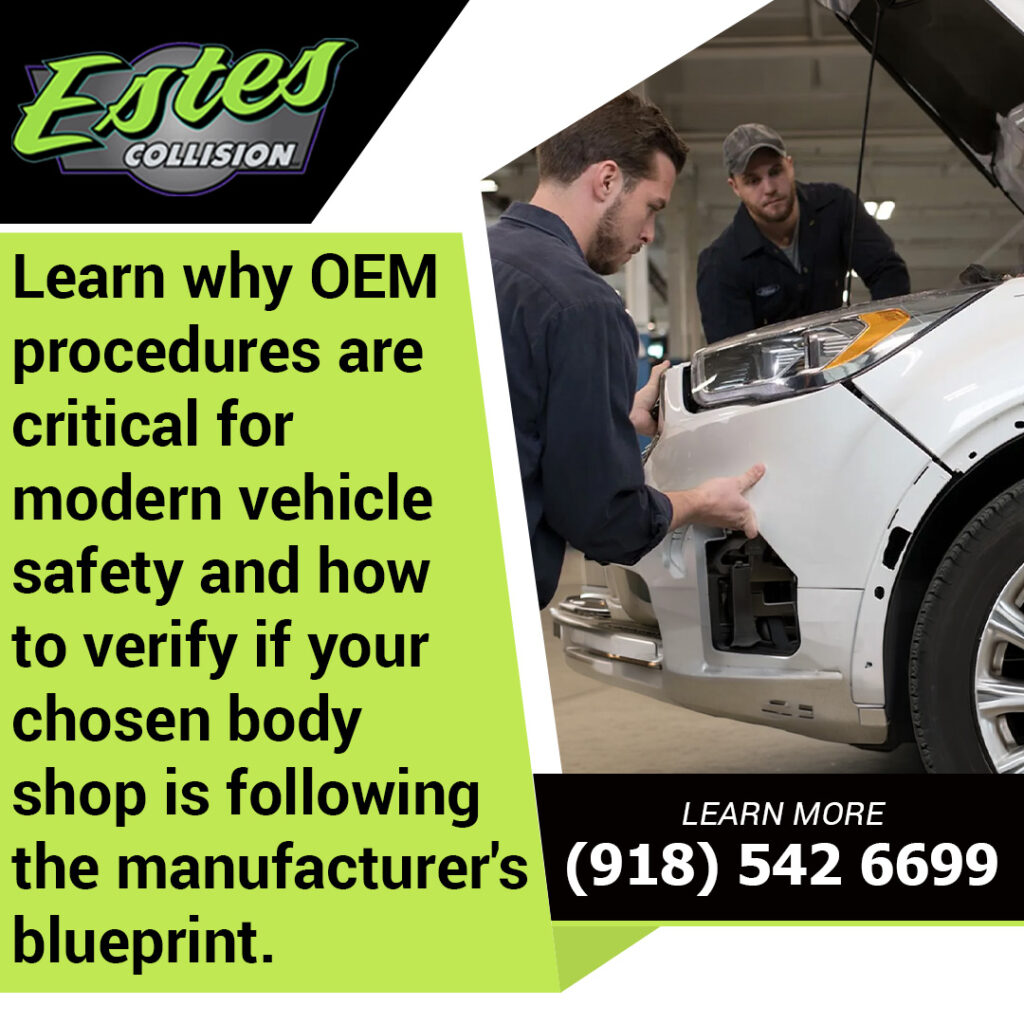
What Are OEM Procedures in Auto Body Repair?
OEM stands for Original Equipment Manufacturer. In collision repair, OEM procedures are instructions published by the company that built your vehicle: Ford, Toyota, Honda, GM, and others. They cover which materials to use, which welding or bonding methods apply, how structural components must be restored, and what post-repair steps are required.
A body panel is not just a cosmetic piece. It is part of a system designed to manage crash energy and protect occupants. Repairing it with generic methods can compromise that, even when the finished result looks correct from the outside. The gap between an OEM repair and a shortcut is often invisible until a future accident reveals it.
Why Modern Vehicles Require OEM Repairs
Today’s late-model vehicles use aluminum, high-strength steel, and composites engineered to absorb crash energy in specific ways. Improper repair disrupts that response. Most late-model vehicles also carry Advanced Driver Assistance Systems (ADAS); automatic emergency braking, lane departure warnings, and more. Repairs to bumpers or front panels during collision repair can shift those sensors out of alignment with no dashboard warning to indicate the problem.
Why Choosing the Right Auto Body Shop Matters
The shop you choose determines whether your vehicle is genuinely safe to drive, not just how it looks when you pick it up. A qualified auto body shop focuses on correct repair methods, not just visual results. Choosing the wrong shop creates three real risks:
- Safety: A structurally compromised vehicle will not protect you in a second collision the way it should.
- Resale value: Improper repairs appear in vehicle history reports and reduce what your car is worth.
- Insurance compliance: Repairs that don’t follow OEM standards may not hold up if your insurer reviews documentation later.
Shops vary widely in training, equipment, and commitment to manufacturer repair standards. We encourage you to ask direct questions before choosing a shop, confident that its process will welcome them.
What Happens When OEM Procedures Are Ignored
Skipping OEM procedures can cause misaligned body panels, weakened crumple zones, sensor failure after bumper or panel repair, and frame straightening that does not meet manufacturer tolerances. A 2017 Texas case makes the stakes clear: a jury awarded around $42 million after a shop glued the roof of a 2010 Honda Fit instead of following Honda’s specification of 104 welds. When that vehicle was later involved in a collision, the roof separated, and both occupants suffered severe injuries. The shop was assigned 75% liability.
7 Signs an Auto Body Shop Actually Follows OEM Procedures
1. Clearly Explains Repair Process
A shop following OEM procedures can describe exactly what they are doing and why, before work begins. They should identify which manufacturer guidelines apply to your specific vehicle and what steps the repair involves. At our shop, we walk every customer through the repair plan before we start.
2. Uses OEM Parts When Required
OEM parts match original specifications for fit, strength, and performance. For structural panels and sensor-bearing components, they are often the required choice. Every decision about parts at our shop is based on what the repair calls for: OEM, where the manufacturer requires it, and qualified aftermarket, where appropriate. Our painters use Sikkens with electronic color-matching technology for a finish that matches your vehicle’s original color.
3. Provides Detailed Written Estimates
A proper estimate lists each procedure separately with labor and parts identified clearly. Vague line items leave room for missing steps. Every vehicle at our shop gets a free written estimate, typically within 15 to 30 minutes, covering the full scope of damage. A documented estimate also speeds up insurance coordination.
4. Industry Certifications or Memberships
Professional memberships reflect ongoing training, ethical practices, and current repair standards. In Oklahoma, membership in the Oklahoma Auto Body Association (OKABA) means technicians stay current with evolving vehicle technology and manufacturer requirements. Estes Collision is a proud OKABA member, and that connection shapes every repair we complete.
5. Works With Insurance Companies the Right Way
A shop that coordinates with most major insurance carriers knows how to document repairs and push back when an insurer’s approach conflicts with manufacturer requirements. Our team handles adjuster communication directly and advocates for the repair your vehicle actually needs, not just what is easiest to approve.
6. Performs Structural and Post-Repair Inspections
OEM-compliant shops check frame alignment before and after repair using precision measuring equipment. Frame straightening that falls outside published tolerances is not a completed repair. Before any vehicle leaves our shop, we review every area touched during the process, panel alignment, door operation, and paint consistency.
7. Warranty-Backed Work
A limited lifetime warranty signals that a shop stands behind its workmanship. Every repair we complete carries a limited lifetime warranty, valid for as long as you own the vehicle; the result of following correct procedures from the start.
Questions to Ask Before Choosing a Shop
These questions reveal whether a shop follows OEM procedures in practice. Take them with you, whether you are comparing local options or searching for a body shop near Miami, Oklahoma.
- Do you follow OEM repair procedures for my specific vehicle? Ask for specifics, not just a yes.
- Will you use OEM parts where the manufacturer requires them? If aftermarket parts are substituted, ask for the reason in writing.
- Can you provide written documentation of repair steps? This supports your insurance claim and protects you later.
- How do you handle post-repair structural inspections? Ask what equipment is used and what is covered.
- Do you work directly with my insurance provider? Ask how disagreements over parts or procedures are handled.
We welcome every one of these questions. If a shop becomes evasive, that response tells you something important.
How Insurance Plays a Role in OEM-Compliant Repairs
Having insurance coverage does not mean every repair detail resolves automatically in your favor. Insurers sometimes recommend aftermarket parts to reduce claim costs. For structural components or sensor-bearing panels, that substitution may compromise the repair. You have the right to request OEM parts where the manufacturer specifies them. We work directly with most major carriers and make sure the repair your vehicle needs is what actually gets done.
Are Insurance-Approved auto body repair shops Always OEM-Compliant?
Not necessarily. Insurance-approved status means a shop meets an insurer’s vendor criteria, separate from OEM compliance. Many drivers assume insurance-approved auto body repair shops always follow OEM procedures, but that is not always the case. A shop can be on an approved list and still skip manufacturer-required steps if the insurer declines to pay for them. Always ask directly about repair standards before authorizing work.
Local Insight: What Drivers in Miami, OK Should Look For
Deer-related collisions are common on northeastern Oklahoma’s rural highways. According to AAA Oklahoma, the average insurance claim for an animal strike in Oklahoma reached $7,620 in 2024, up 16% from the prior year, reflecting the growing complexity and cost of repairing modern vehicles after a collision.
Spring hailstorms are also a regular reality here. When paint is intact, paintless dent repair is often the right approach, removing dents without sanding or repainting. For harder impacts, a structural inspection matters even when the car appears drivable.
When searching for the best auto body repair shop in Miami, OK, look past the estimated price. Documented procedures, professional affiliations, experience, adherence to OEM procedures, and a warranty that stands behind the work are the measures that actually matter.

Common Misconceptions About Auto Body Repair
“All Auto Body Shops Follow the Same Standards”
This is not accurate. No universal requirement compels every shop to follow OEM procedures. Training, equipment, and repair practices vary significantly between shops, and that difference shows in the quality and safety of the repair.
“A Lower Estimate Means Better Value”
Lower estimates often reflect missing steps, not greater efficiency. A significantly lower price may mean skipped structural inspections, non-approved parts, or omitted procedures required for a safe result.
“If It Looks Good, the Repair Is Complete”
Cosmetic appearance and structural integrity are two separate things. A vehicle can look fully restored while carrying hidden frame misalignment. A post-repair inspection is the only way to confirm both.
How to Compare Auto Body Repair Options
When evaluating shops for auto body repair services, use this checklist. We meet every standard on this list.
| What to Check | What to Look For |
| Industry memberships | OKABA or similar professional affiliations |
| Written estimate detail | Itemized parts, labor, and repair procedures |
| OEM parts policy | Clear explanation of when OEM or aftermarket parts are used |
| Insurance coordination | Direct relationship with most major carriers |
| Warranty coverage | Limited lifetime warranty on completed repairs |
| Post-repair inspection | Documented structural and paint check before vehicle return |
Why OEM Procedures Protect Your Vehicle Long-Term
Repairs done to factory standards restore the engineered safety performance your vehicle was built with: crumple zones, structural alignment, and correct panel fit. The industry data shows what is at stake when shops skip these steps.
- In a review of 26 improper‑repair cases, the Collision Industry Conference’s Industry Relations Committee found that about 90% of the vehicles were declared total losses after an independent post‑repair inspection, and about 50% had significant frame damage that was missed or left unaddressed. (Repairer Driven News)
- In the 2017 John Eagle / Honda Fit case, a Dallas jury awarded $42 million in total damages, assigning John Eagle Collision Center 75% liability for deviating from OEM procedures (gluing the roof instead of following Honda’s specified welding pattern). (The Dallas Morning News)
- The average Oklahoma animal‑strike insurance claim reached more than $7,600 in 2024, which is about a 38% increase over the prior five‑year period, reflecting how modern ADAS‑packed vehicles drive up repair costs after a collision.
Choose a Shop That Does the Job Right
OEM procedures are what keep a late-model vehicle structurally safe after a collision. The seven signs in this guide and the questions that go with them give you a practical way to tell whether a shop actually applies them.
Our auto body repair shop focuses on restoring your vehicle to factory condition using correct repair procedures. Call Estes Collision at (918) 542-6699 or email [email protected] for a free estimate. Your vehicle gets the same attention we give our own: OEM procedures, coordination with most major insurance carriers, and a limited lifetime warranty on every repair. We serve Miami, Fairland, Afton, Commerce, Wyandotte, Baxter Springs, and nearby areas.